

Blackjack is one of the most popular and enduring card games, combining strategy, chance and straightforward rules. The online live version adds a real dealer, real-time video and interaction with other players while keeping the fundamental blackjack decision process intact.
To play live blackjack more confidently, focus first on the parts you can control: table rules, basic strategy, bankroll size and your own discipline. If you want a broader foundation before live play, see our classic blackjack strategies and blackjack tips.
1. Understanding the basics of online live blackjack
Before diving into strategy, it is crucial to understand the basic rules and objectives of blackjack. The primary goal is to beat the dealer by having a hand total closer to 21 without going over.
Players and the dealer receive two cards at the start, with one of the dealer's cards typically facing down as the hole card. Players can choose to hit, stand, double down or split when the rules permit it. The dealer follows fixed rules, usually drawing on 16 or lower and standing on 17 or higher, although soft-17 rules can vary.
If these actions are new to you, our how to play blackjack guide explains the basic game flow in more detail.

2. The importance of basic strategy
The first step to improving your online live blackjack game is mastering basic strategy. Basic strategy is a mathematically derived set of decisions based on your hand and the dealer's up card. It is designed to reduce avoidable mistakes and keep the house edge as low as the table rules allow.
A hard hand has no Ace counted as 11. Hitting these totals creates a high bust risk.
These low totals cannot bust on one additional card, so taking another card is the natural play.
Eleven is one of the classic doubling totals, but the exact best action can depend on the dealer's card and table rules.
These are two of the most widely recognized pair-splitting decisions in standard basic strategy.
Splitting 10s gives up an already excellent total in pursuit of two new hands.
Soft hands give flexibility, but soft 19 or higher is already a strong position at many tables.
3. Bankroll management
Proper bankroll management is crucial if you want to play longer and avoid turning a normal losing streak into a major loss. Set the amount you are willing to risk before you join the table, and do not treat the live dealer's pace as a reason to keep adding money.
Determine how much money you are willing to risk and stick to that amount.
Avoid putting a large percentage of the session bankroll on one hand.
Systems that increase bets after losses can escalate exposure quickly during a bad run.
Using a consistent wager size can make both losses and decision-making easier to track.
For a broader look at deposits, table limits and real-money session planning, continue with our real-money online blackjack guide.
4. Knowing when to hit, stand, double down or split
Each decision should be informed by your cards and the dealer's visible up card. The following visual is a practical summary of the article's core decision rules, not a replacement for a complete table-specific strategy chart.
- Hit totals of 8 or lower.
- Hit many hard 12-16 hands when the dealer shows 7 or higher.
- Stand on hard 17 or higher.
- Stand on strong soft totals such as soft 19 or higher.
- 10 and 11 are common doubling totals against weaker dealer cards.
- Some soft 16-18 hands can also be doubling opportunities against 3-6.
- Split Aces and 8s.
- Avoid automatically splitting 10s, 5s or 4s.
For a deeper pair-by-pair and hard/soft-total breakdown, the classic strategy guide provides a more detailed reference.
5. Understanding the dealer's position
The dealer's actions are dictated by specific rules, so the dealer's up card is one of the most important pieces of information on the table. Dealers generally draw until at least 17, although some games require the dealer to hit soft 17.
The dealer has a greater chance of needing multiple draws, so hard totals such as 12-16 are often played more conservatively.
The dealer is more likely to finish with a competitive total, so weak player hands often need to improve.
6. Leveraging advanced strategies carefully
Once basic strategy is familiar, players often look at more advanced ideas. These can be useful to understand, but they should not distract from the decisions that have the biggest and most reliable impact.
Card counting is more difficult in many online live games because tables may use multiple decks, frequent shuffles or continuous shuffling procedures. Understanding the concept can still help explain why deck composition matters, but it is not a shortcut around table rules or variance.
Explore tracking concepts →Perfect Pairs, 21+3 and similar bets add variety but usually have different economics from the main blackjack hand. Treat them as optional entertainment, not as the foundation of a blackjack strategy.
Understand optional bets and insurance →A professional live dealer follows fixed dealing procedures. Do not replace mathematically grounded decisions with guesses based on expressions, confidence or body language.
Return to core blackjack tips →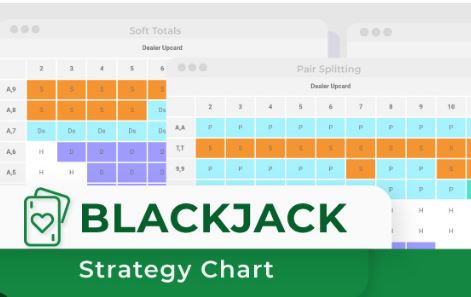
7. Managing expectations and staying disciplined
Blackjack includes both decision-making and chance. A good decision can still lose, and a poor decision can occasionally win. That is why discipline has to be measured by the quality of the decision, not by the result of one hand.
Long uninterrupted sessions can reduce attention and make impulsive decisions more likely.
Alcohol, fatigue and distractions make it harder to follow a consistent strategy.
A previous loss does not make the next hand more likely to win.
Choose the loss limit and session end time before the table begins moving.
8. Choosing the right online live casino and table
Not all live blackjack experiences are identical. Look beyond the graphics and dealer presentation and evaluate the things that affect both the game and your ability to play it comfortably.
Use an operator that is authorized where you are physically located. See our online blackjack legality guide.
Compare payout, deck count, soft-17 rule, doubling and splitting conditions.
Video quality matters because delays, freezes and disconnections can interfere with real-time decisions.
Choose tables where the dealing pace and interface give you enough time to act without feeling rushed.
The minimum wager should fit your planned bankroll rather than forcing oversized bets.
Know where to go if a technical issue affects a hand, balance or withdrawal.
9. Common live blackjack mistakes to avoid
Ignoring basic strategy. Deviating from mathematically grounded decisions without a good reason increases avoidable errors.
Over-betting after losses. Increasing wagers emotionally can drain a bankroll far faster than normal flat betting.
Ignoring table-rule differences. A soft-17 rule, payout or doubling restriction can change the correct decision.
Letting chat or the live presentation distract you. The social environment is part of the appeal, but your cards and the dealer's up card still come first.
Relying on side bets or betting systems. Exciting optional wagers do not replace basic strategy or bankroll control.
Our dedicated blackjack mistakes guide covers additional beginner errors that apply to both software and live dealer tables.
Conclusion
Mastering online live blackjack starts with the same fundamentals as any other blackjack game: understand the rules, use basic strategy, manage the bankroll and stay disciplined. The live dealer format can make the experience more engaging, but it does not change the mathematics of a hand.
No strategy guarantees a win on every hand or every session. The practical goal is to reduce avoidable mistakes, select better tables and make consistent decisions while keeping the amount at risk within limits you chose in advance.
The live dealer changes the atmosphere, not the objective. Your best tools are still the table rules, the dealer's up card, basic strategy and disciplined bankroll management.