
Blackjack Insurance Explained: Should You Ever Take It?
Insurance is the side bet nearly every blackjack player encounters early, and the one that generates the most confusion - it sounds protective, it's offered at the exact moment your hand feels most vulnerable, and the dealer often prompts you to decide on it out loud. But the math behind insurance is more straightforward than the psychology surrounding it suggests. This guide breaks down exactly how insurance works, the real odds behind it, and the specific - and rare - situations where taking it actually makes sense.
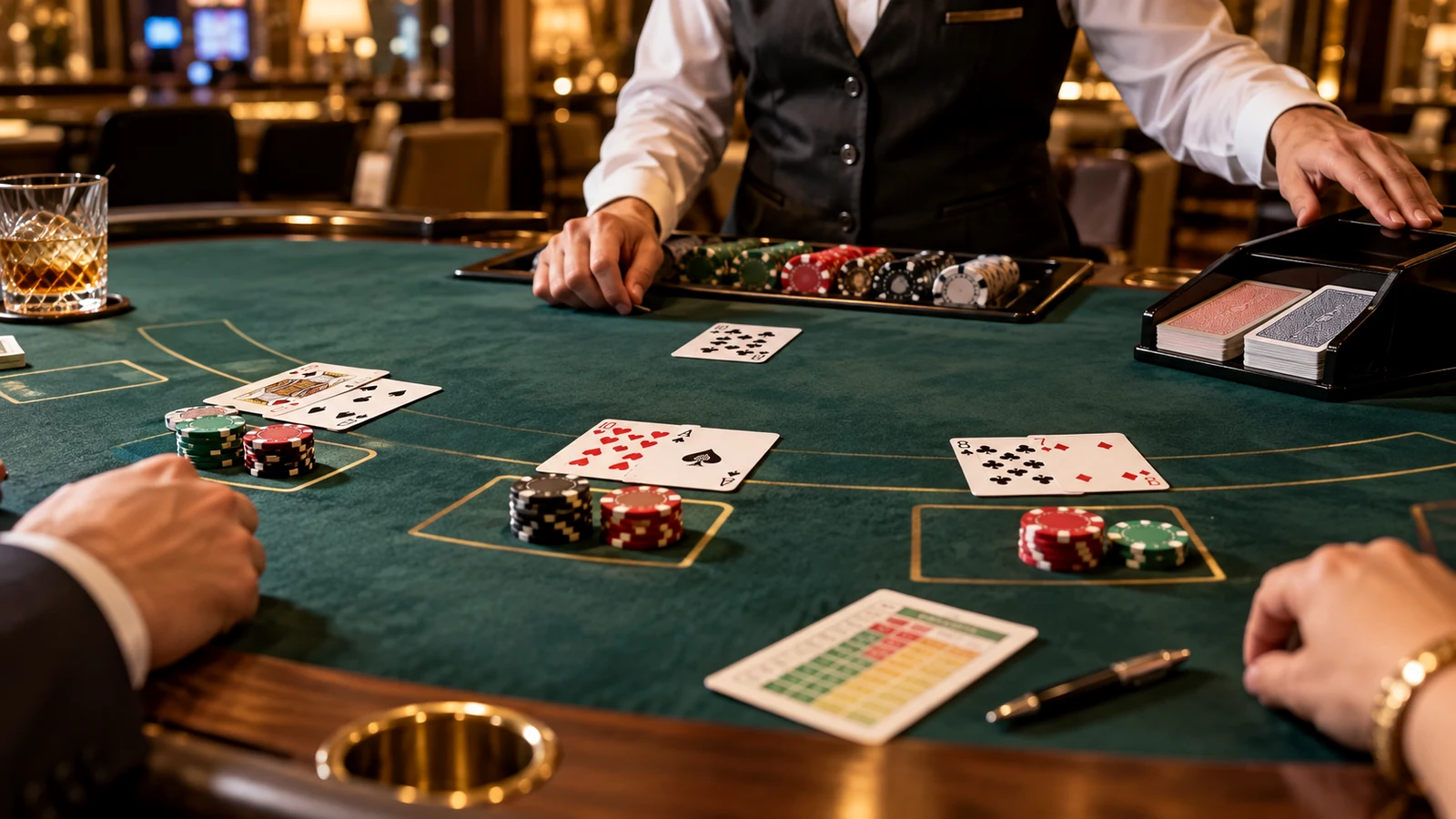
- Trigger: Offered when dealer shows an Ace
- Payout: Insurance normally pays 2 to 1
- Break-even: Dealer 10-value probability needed to break even
- Fresh deck: Approximate 10-value share in a standard deck
Insurance is the side bet nearly every blackjack player encounters early, and the one that generates the most confusion - it sounds protective, it's offered at the exact moment your hand feels most vulnerable, and the dealer often prompts you to decide on it out loud. But the math behind insurance is more straightforward than the psychology surrounding it suggests. This guide breaks down exactly how insurance works, the real odds behind it, and the specific - and rare - situations where taking it actually makes sense.
| Insurance point | From the guide |
|---|---|
| When offered | Dealer shows an Ace |
| Maximum wager | Typically up to half the original bet |
| Payout | 2 to 1 |
| Break-even dealer 10-value probability | 33.3% |
| Fresh standard-deck 10-value share | About 30.8% |
What Is Blackjack Insurance?
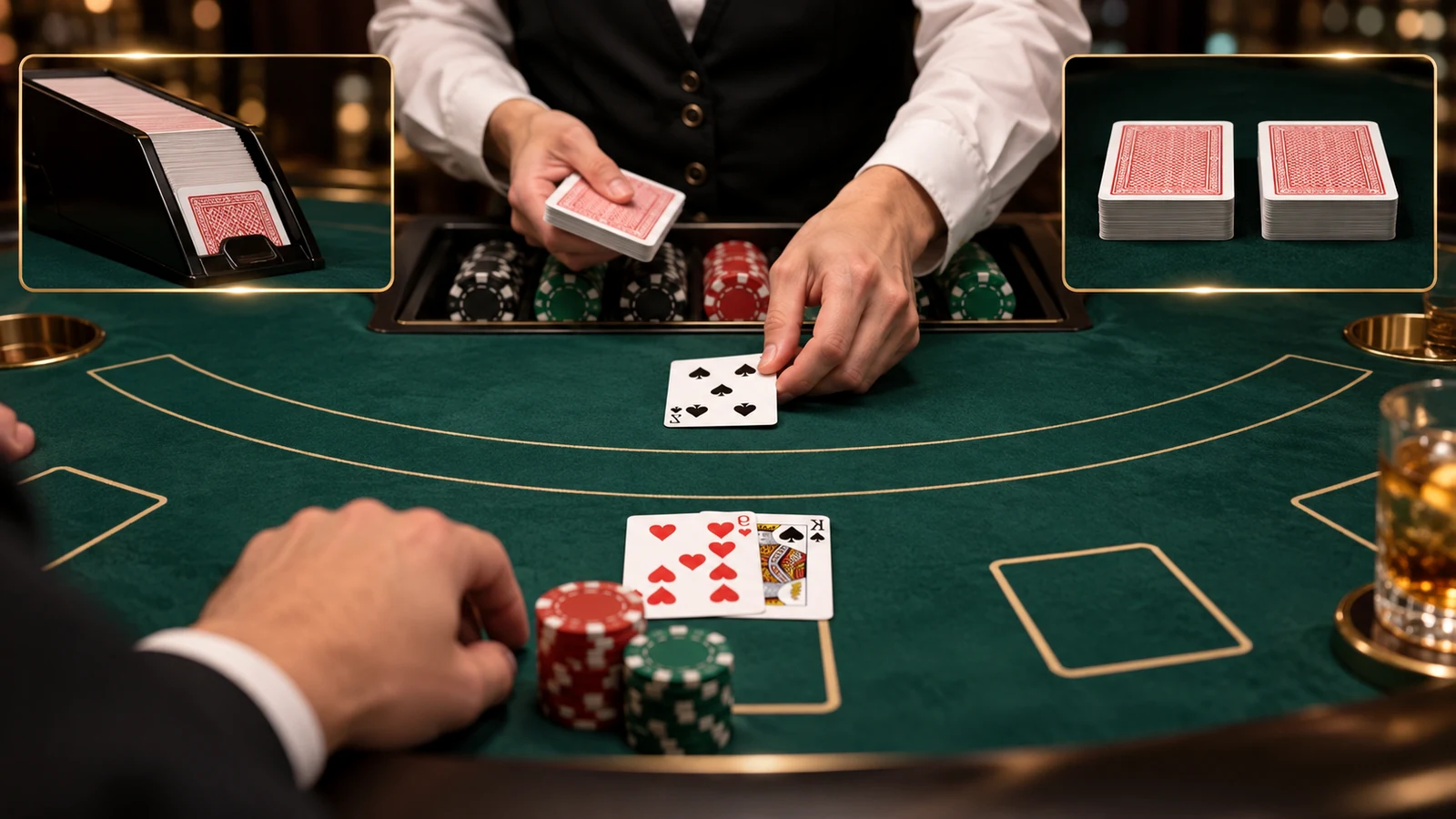
Insurance is a side bet offered whenever the dealer's up card is an Ace. Before the dealer checks their hole card, you're given the option to place an insurance bet - typically up to half your original wager - that pays 2 to 1 if the dealer's hole card turns out to be a 10-value card, completing a dealer blackjack.
If the dealer does have blackjack, your insurance bet pays out at 2 to 1, which exactly offsets the loss of your original bet (assuming your own hand isn't also a blackjack, which would push against the dealer's). If the dealer doesn't have blackjack, your insurance bet is simply lost, and the hand continues normally with your original bet still in play.
Why Insurance Sounds Like a Safety Net
The name itself does a lot of the persuasive work - "insurance" implies protection against a bad outcome, and it's offered at precisely the moment a dealer Ace creates real uncertainty about whether you're about to lose your hand to a dealer blackjack. This framing, combined with the dealer typically announcing "insurance?" out loud and pausing for a decision, creates social and psychological pressure that doesn't exist for most other side bets, which is part of why insurance gets taken far more often than the underlying math supports.
The Actual Math Behind Insurance
Insurance is, at its core, a bet on whether the dealer's hidden hole card is a 10-value card (10, Jack, Queen, or King). In a standard deck, 16 of the 52 cards are 10-value cards - meaning, in a full, freshly shuffled single deck, the probability of any given unseen card being a 10-value card is 16/52, or roughly 30.8%.
For insurance to be a break-even bet, the true probability of the dealer having a 10-value hole card would need to be exactly 1 in 3 (33.3%), since the bet pays 2 to 1 - meaning you'd need to win one out of every three insurance bets just to break even, and the standard deck composition puts the actual probability slightly below that threshold in most situations.
Because the real probability (around 30.8% in a fresh single deck, and similarly below one-third in most multi-deck shoe compositions) is lower than the 33.3% breakeven point the payout requires, insurance is a negative expected value bet for the average player in the average situation - which is why basic strategy near-universally recommends against taking it, regardless of what your own hand happens to be.
Why "Even Money" Is the Same Bet in Disguise
If you have a blackjack yourself and the dealer shows an Ace, the dealer or the table interface will often offer you "even money" instead of framing it as insurance directly - guaranteeing you a 1:1 payout on your blackjack immediately, rather than risking the dealer also having blackjack (which would otherwise result in a push, since two blackjacks tie).
This is mathematically identical to taking insurance on your winning blackjack hand: you're giving up the chance at your full 3:2 blackjack payout in exchange for a guaranteed smaller payout, based on the same unfavorable insurance odds described above. Basic strategy treats "even money" exactly the same way it treats standard insurance - as a bet you should decline, since taking your chances with the full 3:2 payout carries a higher expected value over the long run than locking in the smaller guaranteed amount.
When Does Insurance Ever Make Sense?
The one scenario where insurance can become a mathematically sound bet is when a player has enough specific information about the remaining deck composition to know that significantly more than one-third of the remaining unseen cards are 10-value cards - a situation that primarily arises through card counting, where a player has been tracking the ratio of high-value to low-value cards remaining in the shoe throughout the session.
In a heavily 10-rich shoe (identified through a counting system), the true probability of the dealer's hole card being a 10-value card can exceed the 33.3% breakeven threshold, making insurance a genuinely profitable bet in that specific, identifiable situation - but this only applies to players actively counting cards and tracking the count in real time, not to a player evaluating insurance on a single hand in isolation without that broader context. For more on how counting systems track this kind of information, see our guide to the Hi-Lo card counting system.
For the overwhelming majority of players who aren't counting cards, insurance remains a negative expected value proposition regardless of what their own hand looks like - your own hand's strength has no bearing on the probability of the dealer's hole card, since that's determined purely by the remaining deck composition.
Insurance Across Different Blackjack Variants
Standard Blackjack
The insurance mechanics and math described above apply to standard blackjack in its typical form, where the dealer's hole card is dealt (though hidden) before players act.
European Blackjack
Because European blackjack doesn't use a hole card - the dealer's second card isn't drawn until after all players complete their hands - insurance in this variant is technically a bet on a card that hasn't been dealt yet at the time you decide, rather than a bet on an already-determined but hidden card. The underlying probability math works out the same way in most cases, but the structural difference is worth understanding if you're used to hole-card games.
Spanish 21
Insurance in Spanish 21 functions the same way as standard blackjack, but it's worth remembering that Spanish 21 decks have all 10-value cards removed - which changes the actual probability of the dealer's hole card being a 10-value card (there are fewer of them left in the deck to begin with), generally making insurance an even worse bet in this variant than in a standard deck, not a better one, despite the altered deck composition.
Insurance vs. Other Side Bets
Insurance is often categorized alongside other blackjack side bets, but it differs in one key respect: most side bets (like Match the Dealer, Perfect Pairs, or 21+3) are resolved by your own cards or a combination of your cards and the dealer's up card, independent of your main hand's outcome. Insurance, by contrast, is specifically tied to whether the dealer has blackjack - directly connected to your main hand's most immediate threat, which is part of why it feels different (and more urgent) than other optional side wagers, even though the underlying math treats it the same way: a fixed-odds proposition that, absent specific card-counting information, doesn't favor the player.
A Simple Rule of Thumb
For the vast majority of players - anyone not actively counting cards and tracking a live count - the correct approach to insurance is straightforward: decline it every time, regardless of your own hand, including when you're offered "even money" on your own blackjack. This isn't a close call or a matter of personal risk tolerance; it's a bet with a well-established negative expected value under normal deck conditions, and declining it consistently is simply correct basic strategy.
Frequently Asked Questions
Is insurance ever a good bet for casual players? No - for players not actively counting cards, insurance carries a negative expected value in the vast majority of situations, and basic strategy recommends declining it every time.
What's the difference between insurance and "even money"? They're mathematically the same bet. "Even money" is simply insurance offered specifically when you already have a blackjack yourself, guaranteeing a smaller payout instead of risking a push against a potential dealer blackjack.
Does my own hand affect whether I should take insurance? No - the probability of the dealer having blackjack is determined entirely by the remaining deck composition, not by what your own hand contains, so your hand's strength doesn't change whether insurance is a good bet.
Can card counters profit from insurance? Yes, in specific situations - when a card counter's tracked count indicates the remaining shoe is unusually rich in 10-value cards, insurance can become a genuinely profitable bet, though this only applies to players actively tracking the count in real time.
Why does the dealer ask about insurance out loud? It's standard procedure whenever the dealer's up card is an Ace, offered before the hole card is checked. The verbal prompt and pause can create pressure to take the bet, but this doesn't change the underlying unfavorable math for players without specific card-counting information.
This guide is for informational purposes. Always gamble responsibly and within your means.