
Match the Dealer & Other Popular Blackjack Side Bets Explained
Side bets add a second, independent layer of action to a blackjack table - wagers that pay out based on specific card combinations rather than whether you beat the dealer's hand. Match the Dealer, Perfect Pairs, and 21+3 are three of the most widely offered, each with its own trigger conditions, payout structure, and house edge. This guide breaks down exactly how each one works and what to know before adding them to your bankroll. For a broader overview of the side bet category as a whole, see our general blackjack side bets guide.
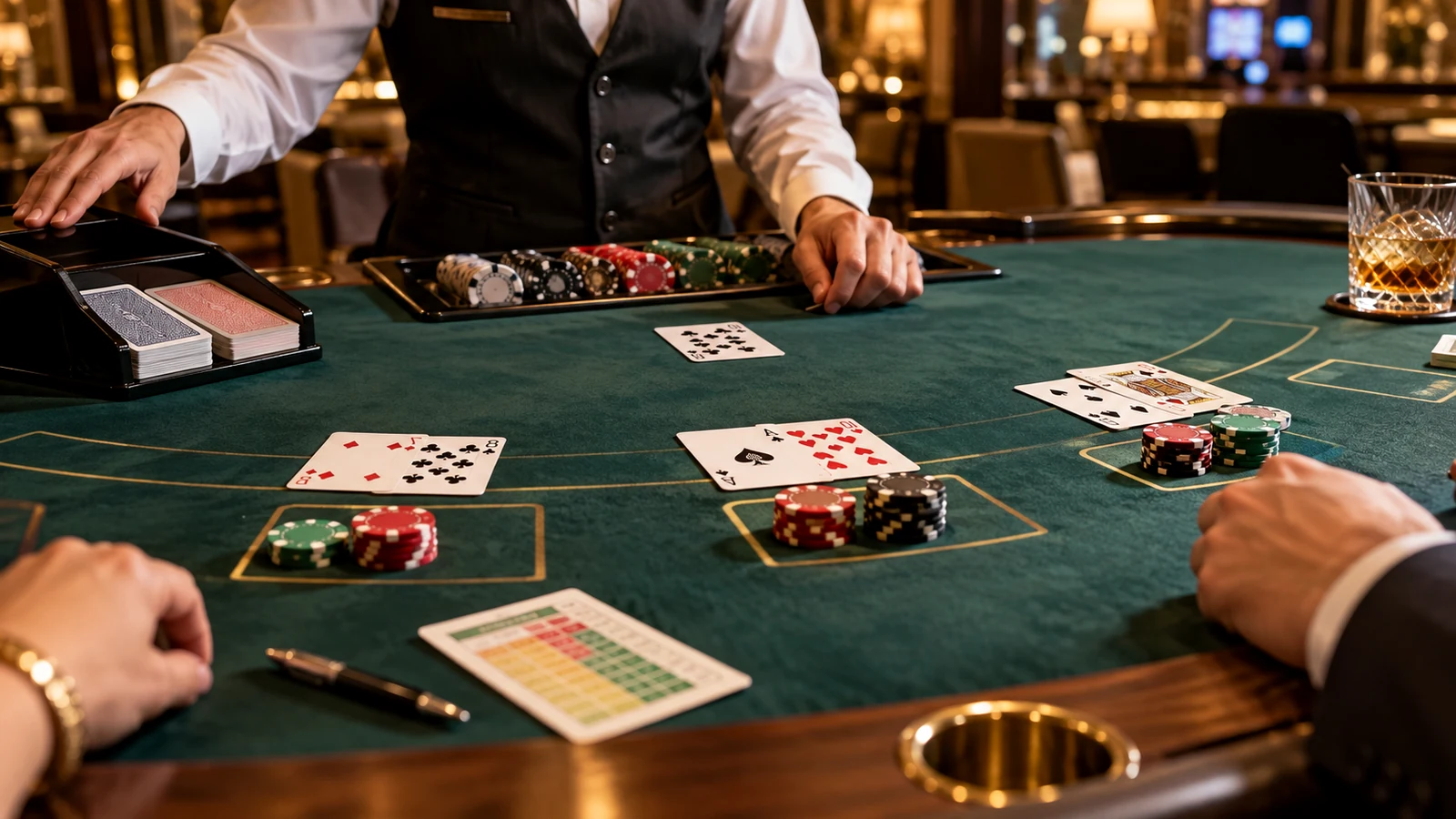
- Match Dealer: Pays for matching dealer up-card rank
- Perfect Pairs: Pays by pair type
- Poker mix: Uses two player cards plus dealer up card
- Buster: Pays according to dealer bust length
Side bets add a second, independent layer of action to a blackjack table - wagers that pay out based on specific card combinations rather than whether you beat the dealer's hand. Match the Dealer, Perfect Pairs, and 21+3 are three of the most widely offered, each with its own trigger conditions, payout structure, and house edge. This guide breaks down exactly how each one works and what to know before adding them to your bankroll. For a broader overview of the side bet category as a whole, see our general blackjack side bets guide.
What Side Bets Have in Common
Every blackjack side bet shares the same basic structure: it's wagered independently of your main hand, typically before the deal, and it's resolved based on specific cards - usually your own initial two cards, sometimes combined with the dealer's up card - regardless of how your main hand against the dealer ultimately plays out. This means you can lose your main hand and still win a side bet, or vice versa; the two are entirely separate wagers settled by different criteria.
Side bets are also, almost without exception, carrying a significantly higher house edge than well-played main-hand blackjack. They're best understood as an optional, higher-variance addition to your session rather than a core part of an optimal blackjack strategy.
Match the Dealer
How It Works
Match the Dealer pays out based on whether either of your first two cards matches the rank of the dealer's up card. If either (or both) of your cards shares the same rank as the dealer's visible card, the bet pays out - with a higher payout if both of your cards match, and a higher payout still if the matching cards also share the same suit as the dealer's up card.
Typical Payout Structure
| Outcome | Typical Payout |
|---|---|
| One card matches dealer's up card (different suit) | 4 to 1 |
| One card matches dealer's up card (same suit) | 11 to 1 |
| Both cards match dealer's up card (different suits) | 8 to 1 |
| Both cards match dealer's up card (same suit as dealer, different from each other) | 15 to 1 |
| Both cards match dealer's up card (all same suit, i.e., three of a kind suited) | 100 to 1 |
Exact payout figures vary by casino and software provider, so it's worth checking the specific pay table before wagering.
House Edge
Match the Dealer typically carries a house edge in the range of 4% to 8%, depending on the number of decks in play and the specific pay table offered - notably higher than well-played main-hand blackjack, and generally higher than several other common side bets, reflecting the relatively low probability of hitting a qualifying match.
Perfect Pairs
How It Works
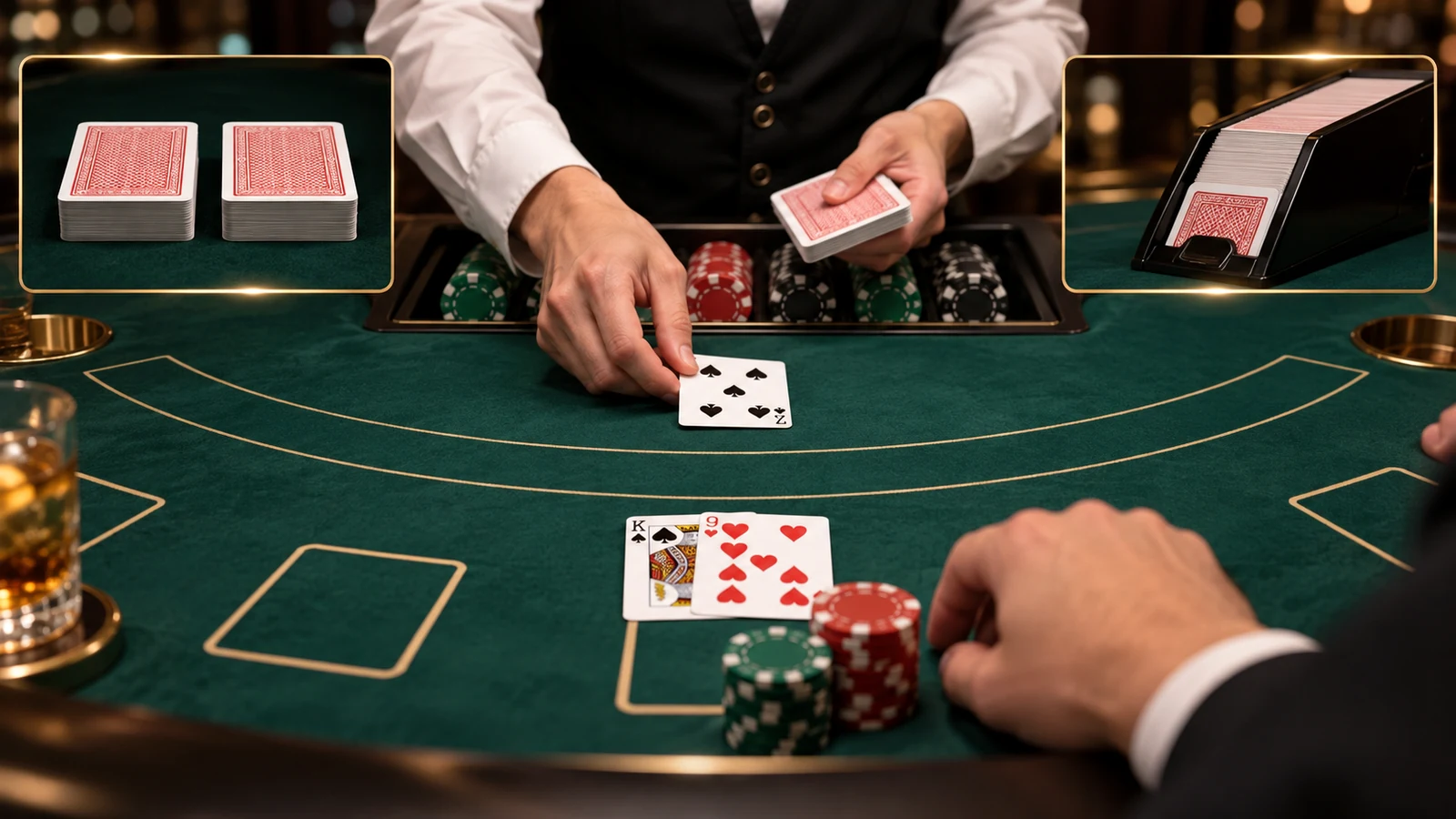
Perfect Pairs pays out if your first two cards form a pair, with the payout tier depending on how closely matched that pair is - a mixed pair (same rank, different color and suit) pays the least, a colored pair (same rank, same color, different suit) pays more, and a perfect pair (same rank and suit - only possible in multi-deck games where duplicate suited cards exist across decks) pays the most.
Typical Payout Structure
| Pair Type | Description | Typical Payout |
|---|---|---|
| Mixed Pair | Same rank, different color (e.g., 8♠ and 8♥) | 5 to 1 |
| Colored Pair | Same rank, same color, different suit (e.g., 8♠ and 8♣) | 12 to 1 |
| Perfect Pair | Same rank and suit (e.g., 8♠ and 8♠ from separate decks) | 25 to 1 |
House Edge
Perfect Pairs typically carries a house edge in the range of 3% to 8%, varying based on the number of decks in play (more decks slightly increase the probability of a perfect pair specifically, since there are more duplicate suited cards available across the shoe) and the exact pay table offered.
21+3
How It Works
21+3 combines your first two cards with the dealer's up card to form a three-card poker hand, paying out based on standard poker hand rankings applied to this three-card combination - flush, straight, three of a kind, straight flush, or suited three of a kind.
Typical Payout Structure
| Three-Card Hand | Typical Payout |
|---|---|
| Flush | 5 to 1 |
| Straight | 10 to 1 |
| Three of a Kind | 30 to 1 |
| Straight Flush | 40 to 1 |
| Suited Three of a Kind | 100 to 1 |
House Edge
21+3 typically carries a house edge in the range of 3% to 7%, depending on the specific pay table and number of decks used. Because this side bet draws on standard poker hand probabilities across three cards, its odds are more standardized across casinos than some other side bets, though pay table variations still meaningfully affect the exact figure.
Buster Blackjack
How It Works
Buster Blackjack pays out specifically when the dealer busts (goes over 21), with the payout tier determined by how many cards the dealer's hand took to bust - a dealer bust reached quickly (fewer total cards) pays less than a dealer bust reached only after drawing several additional cards.
Typical Payout Structure
| Dealer Busts With | Typical Payout |
|---|---|
| 3 cards | 2 to 1 |
| 4 cards | 4 to 1 |
| 5 cards | 9 to 1 |
| 6 cards | 50 to 1 |
| 7 or more cards | 250 to 1 |
House Edge
Buster Blackjack's house edge typically falls in the range of 5% to 10%, among the higher edges of the common side bet options, reflecting the relatively low probability of a dealer bust requiring many additional cards to complete.
Comparing the Main Side Bets
| Side Bet | Based On | Typical House Edge | Best For |
|---|---|---|---|
| Match the Dealer | Your cards vs. dealer's up card | 4-8% | Players who like rank-matching bets tied directly to the dealer |
| Perfect Pairs | Your own first two cards | 3-8% | Players who want a bet resolved immediately on the deal |
| 21+3 | Your two cards + dealer's up card, as poker hand | 3-7% | Players familiar with poker hand rankings |
| Buster Blackjack | Whether and how the dealer busts | 5-10% | Players specifically betting on dealer outcomes rather than their own hand |
Why Side Bet House Edges Are Higher Than Main-Hand Blackjack
Well-played blackjack, using correct basic strategy, can bring the house edge on your main hand down to well under 1% in many rule sets - among the lowest house edges available in any casino game. Side bets don't benefit from the same skill-based strategy layer; they're essentially fixed-odds propositions resolved by the luck of specific card combinations, with no hit/stand/double/split decision-making to influence the outcome. This structural difference is why side bets consistently carry meaningfully higher house edges than the main game, regardless of which specific side bet you're considering. For a full breakdown of how basic strategy brings the main-hand house edge down, see our blackjack odds and house edge guide.
Should You Play Blackjack Side Bets?
Side bets are best approached as an optional source of additional variance and entertainment rather than a core part of a value-focused blackjack strategy. Because they carry no basic-strategy equivalent - there's no skill-based decision that changes their odds - a player's choice to include them comes down entirely to personal risk tolerance and how much they enjoy the added unpredictability, rather than any strategic optimization. Players focused on minimizing the house edge across an entire session generally either skip side bets altogether or limit them to a small fraction of their total wagering, reserving the bulk of their bankroll for well-played main-hand blackjack. Insurance - technically a side bet itself, tied to the dealer's potential blackjack - deserves its own separate consideration, covered in full in our blackjack insurance guide.
Frequently Asked Questions
Can I win a side bet even if I lose my main hand? Yes - side bets are resolved independently of your main hand's outcome against the dealer, based purely on the specific card combination the side bet requires.
Which blackjack side bet has the lowest house edge? It varies by specific pay table, but 21+3 and Perfect Pairs generally sit toward the lower end of common side bets (roughly 3% at the best available pay tables), while Buster Blackjack and Match the Dealer tend to run higher.
Do side bets affect my main-hand strategy? No - your optimal hit, stand, double, and split decisions for your main hand remain unchanged regardless of which side bets you've placed, since side bets are resolved independently.
Is Match the Dealer available at every blackjack table? No - side bet availability varies by casino and specific table, both online and in land-based venues. Check the table's posted options or the game's rules panel to see which side bets, if any, are offered.
Are side bets a good way to reduce blackjack's overall house edge? No - side bets consistently carry a higher house edge than well-played main-hand blackjack, so adding them to your session increases your average expected loss rather than reducing it, even though they can add entertainment value and variance some players enjoy.
This guide is for informational purposes. Always gamble responsibly and within your means.