
Side bets are optional wagers placed alongside your main blackjack bet. Instead of depending on whether you ultimately beat the dealer, they usually pay for a specific card combination, dealer outcome or small event inside the hand.
That difference matters. Basic blackjack strategy can reduce avoidable mistakes in the main game, but a side bet is usually a fixed-odds wager. If you need the standard game rules first, start with How to Play Blackjack. For the mathematically correct main-hand decisions, use the blackjack strategy chart.
Why side bets are different from basic strategy
Standard blackjack, played with correct basic strategy, can bring the house edge as low as about 0.5% under favorable rules. Side bets do not work the same way - most are fixed-odds wagers on card combinations, so no amount of skillful hitting or standing changes the payout.
House edges on side bets commonly run anywhere from roughly 2% up to 15% or more depending on the exact bet and paytable. That does not make them worthless - they can be entertaining and can produce large payouts - but they should be understood as a separate, higher-risk wager layered on top of the main hand.
Perfect Pairs
Perfect Pairs is one of the most widely offered side bets across online and live blackjack. You are betting that your first two cards will form a pair, with the payout scaling based on how exact the match is.
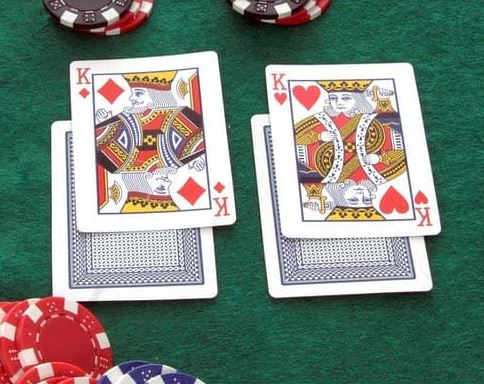
Same value, different color and suit - for example, 7 of hearts and 7 of clubs.
Same value and same color, but a different suit - for example, 7 of hearts and 7 of diamonds.
Identical value, suit and color - possible in a multi-deck shoe when the same card appears from another deck.
21+3
21+3 combines your first two cards with the dealer's up card to form a three-card poker hand. The wager is resolved from those three cards, independently of how you later play the main blackjack hand.
Payouts increase with rarity. Because 21+3 uses the dealer's up card as well as your own two cards, the side bet is settled before your Hit, Stand, Double or Split decisions affect the main blackjack hand.
Lucky Ladies
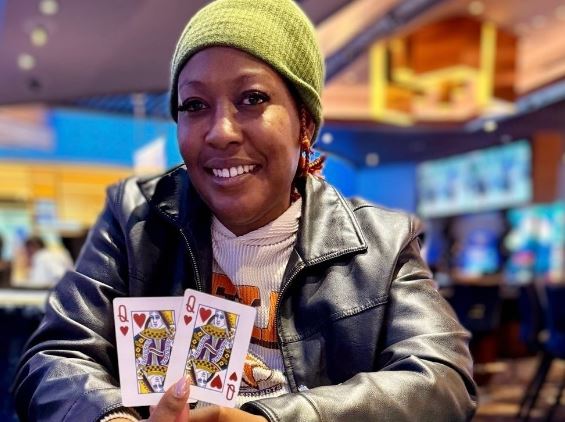
Lucky Ladies is a higher-variance side bet centered on your first two cards totaling 20, with bigger payouts for more specific ways of reaching that total.
- 01Any two cards totaling 20The lowest qualifying tier.
- 02Suited 20Two 10-value cards or other combinations totaling 20 in the same suit.
- 03Matched 20Identical rank and suit in a multi-deck game.
- 04Queen of hearts pairThe top payout at many tables, sometimes tied to a progressive jackpot.
- +Dealer-bust bonusSome versions add an extra award if the dealer also busts after the side bet hits.
Higher variance: the supplied guide identifies Lucky Ladies as one of the higher-house-edge side bets in this group, and progressive versions can use a different payout structure.
Insurance
Insurance is technically a side bet, offered only when the dealer's up card is an Ace. You can wager up to half your original bet that the dealer's hole card is a 10-value card, completing a natural blackjack. If correct, insurance pays 2:1.
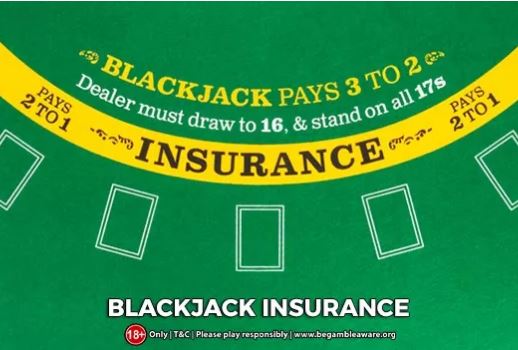
It is a separate wager, not protection on your hand
For a player who is not counting cards, insurance loses money over the long run. If you have a natural blackjack yourself and are offered "even money," that is the same underlying wager in a different form.
See Insurance in the beginner rules guide → Read the full Insurance article →Bust It / Bet the Bust
This side bet wagers on whether the dealer will bust, with the payout scaling based on how many cards it takes the dealer to go over 21. A third-card dealer bust typically pays far less than a sixth- or seventh-card bust.
The attraction is the possibility of a sizable payout on an unusually long dealer hand. The tradeoff is that long dealer busts are rare, so the supplied guide characterizes this as one of the steeper-house-edge wagers on the list.
Buster Blackjack
Buster Blackjack is similar in spirit to Bust It. It pays based on the dealer busting, with the multiplier tied to how many cards the dealer draws before going over 21 - the more cards, the larger the potential payout.
Royal Match
Royal Match is available mainly at land-based and some live-dealer blackjack tables. It pays when your first two cards share the same suit, with a larger payout when those cards are specifically the King and Queen of that suit.
Your first two cards share the same suit.
King and Queen of the same suit - the higher-paying version of the wager.
Should you play blackjack side bets?
The answer depends on what you want from the session. Side bets can add excitement and the chance at a large payout, but they are generally not the choice for someone whose priority is keeping the mathematical cost of play as low as possible.
They may fit if...
- You are playing primarily for entertainment and enjoy the added variance.
- You have checked the paytable and understand the house edge you are accepting.
- The side-bet stake is small relative to your main wager and overall bankroll.
Consider skipping them if...
- You are trying to play as close to optimal blackjack odds as possible.
- You do not know the specific paytable at your table.
- You are working with a limited bankroll and want to reduce high-house-edge wagers.
Know exactly what the side bet is paying for, what the paytable says and how much of your bankroll you are putting on it before you place the wager.